
Caring for Your HMDD Sweatpants and Shorts to Keep Them Going for Years
The brand HMDD , standing for Happy Memories Don’t Die, has earned a dedicated customer base on the foundation of pieces that feel meaningful, not disposable. If you’ve got a pair of HMDD sweatpants or shorts, you no doubt already know they’re not the sort of piece you’d want to toss into a hot wash and forget about. Fabric blends used in streetwear-leaning labels like HMDDLA tend to be more substantial, often fleece-backed or brushed, which means they respond in different ways to heat, agitation, and drying than a plain cotton shirt. This overview goes over the hands-on steps that preserve the hue, graphic, and fit of your HMDD pieces intact for years rather than months. None of this is complicated, but neglecting it is exactly how good sweats turn into worn-out, bobbled, baggy pieces by the next season.
Why HMDD Garments Need Extra Care Attention
Streetwear labels that center on graphic work, embroidery, or puff prints put much of the piece’s worth into elements that rest on top of the material rather than integrated into the weave. That’s the case for much of HMDD’s collection, and it’s a repeated point in nearly every hmdd review you’ll find online — people appreciate the aesthetic, but they also point out how hmdd vintage tee the prints hold up (or don’t) after repeated washing. A cracked logo or a faded design doesn’t just look worse; it shifts how the whole piece reads, transforming something that once looked deliberate into something that looks uncared-for.
There’s a financial side to this too. High-end sweats and shorts from brands positioning themselves as best hmdd clothing picks aren’t cheap sweatshop basics — they’re priced like a long-term investment, which means the price-per-use only pays off if the garment lasts through 50, 100, or 150 wears. A $10 pair of gym shorts can be thrown in the wash without care for a full year and it hardly makes a difference. A thicker, more detailed pair of HMDD shorts is a different calculation entirely.
Fleece and brushed-backed materials, which HMDD uses in several of its sweatpants silhouettes, also behave differently under warmth than plain jersey cotton. Heat is the single biggest threat to fleece integrity — it melts the fine fibers that form that soft brushed texture, compressing it for good. There’s no reversing it once it occurs, no matter how carefully you wash afterward. Which means the habits you form now, from the very first laundering, determine how the garment ages for the remainder of its lifespan.
The Essential Rules for Washing HMDD Sweats
A cold-water setting isn’t optional for anything with a screen-printed or stitched design. Color bleeding speeds up and the adhesive layer under screen prints softens whenever water climbs above 86°F (30°C), making it clear why logos crack or peel within 10–15 washes. Stick to chilled or, at most, lukewarm cycles.
Invert every piece so it’s inside-out before loading it into the washer. Surface wear on printed designs and embroidered details is minimized by this one move, which shields the front face from scraping against zippers, drawstrings, or other garments in the wash. It takes five seconds and it’s the most underrated step in the full garment-care process.
Over the long run, optical brighteners and heavy fragrance additives accumulate in the fleece, dulling the true color—so it’s best to use a mild, dye-free detergent rather than one with those extras, especially for deeper HMDD shades such as black, charcoal, and olive. Roughly a quarter-cup of a mild liquid detergent typically suffices for one pair of sweatpants; extra detergent doesn’t improve results.
Avoid fabric softener. That may seem counterintuitive for warm and comfy fleece, but softener coats fibers in a waxy buildup that diminishes the fabric’s ability to breathe and, over 20-30 washes, makes brushed fleece end up matted rather than plush. If you want lasting plushness, a lower spin speed (600-800 RPM) does more good than any fabric conditioner ever will.
Group and wash matching shades together while steering clear of overstuffing the washer, sincea drum filled past 75% capacity means clothes are unable to shift freely, thereby raising abrasion and pilling. For a single pair of HMDD sweatpants or shorts, pairing them with 3-4 other matching-weight items is the sweet spot.
The Moment Where The Lion’s Share of Wear Actually Happens: The Drying Stage
If washing is where mistakes accumulate slowly, drying is where damage happens fast. High-heat tumble drying is responsible for the majority of shrinkage complaints across fleece and heavyweight cotton blends, and it’s very likely the single biggest factor separating a pair of HMDD sweatpants that lasts three years from one that’s unwearable after eight months.
When it comes to drying, air drying flat is the top choice. Setting the garment out flat, rather than hanging it up, prevents the pull created by soaked fabric from stretching the waistband or leg openings — something that occurs quite readily with wet fleece, which can retain as much as 3 times its dry weight in water before dripping begins.
If a dryer is unavoidable, use the lowest heat setting available and remove the garment while it’s still slightly damp, then let it finish air drying. This cuts total heat exposure by roughly half compared to running a full high-heat cycle, and it meaningfully reduces pilling on brushed interiors.
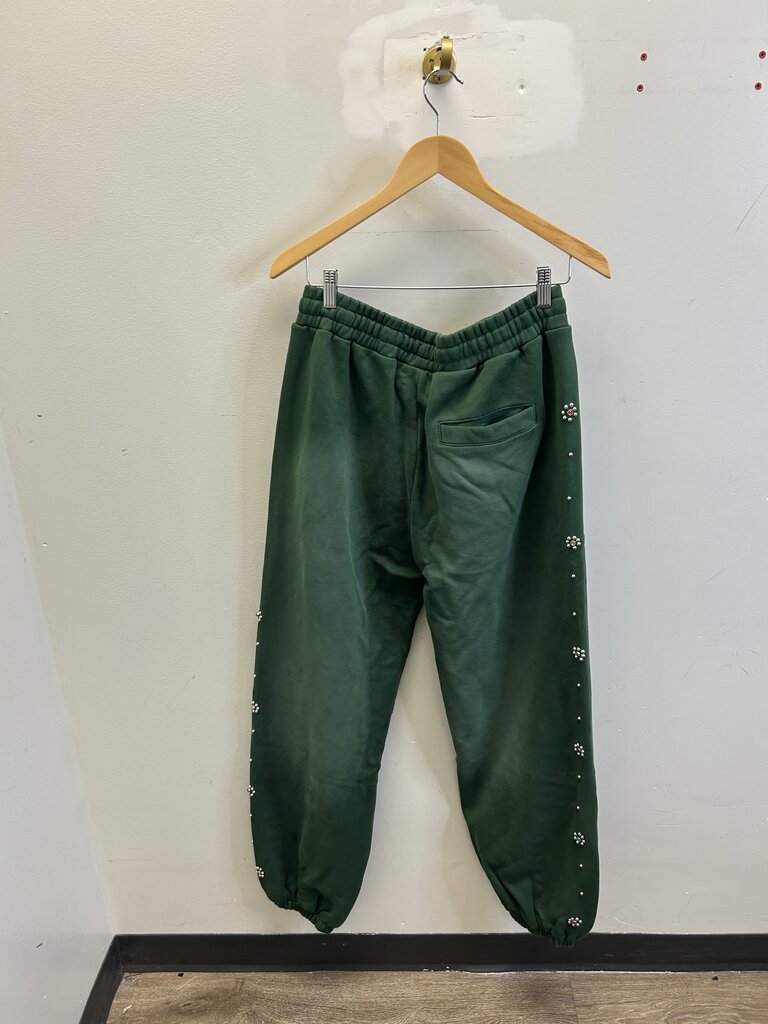
Never set out to dry sweatpants or shorts with a printed graphic facing down on a heating element. Direct, sustained heat above 122°F (50°C) is sufficient to soften plastisol-based prints to the point where the design can lift off and stick onto the material beneath it, effectively ruining the design permanently.
Everyday Habits and Upkeep
Your storage approach for HMDD clothing when it’s not being worn matters almost as much as the way you launder it. Folding rather than hanging is generally better for thick, heavy sweatpants and shorts, as hanging heavy fleece by a waistband clip can create permanent stretch marks at the hang point within a few weeks.
Since ultraviolet exposure is a subtle yet true cause of color fading, items should be kept out of direct sunlight during storage; darker colorways especially can visibly lighten after just a few months on a sunlit shelf or in a car.
Give your pairs a rotation. Because rest periods matter, wearing the same shorts or sweatpants day after day stops the material from regaining its shape, and wear accelerates at high-wear zones such as the knee area and inner-thigh stitching. If you own a few pairs on rotation instead of wearing a single one nonstop, you can roughly double how long each garment effectively lasts.
Rather than permitting them to bond through a full wear cycle, tackle stains right away. Typically, a stain treated within an hour lifts out with cold water and mild soap; but, neglected for 24 hours, the identical mark usually demands a stronger pretreatment and hotter wash cycle, which threatens the design.
Quick Comparison: Positive Routines vs. Habits That Cut Life Short
| Care Instruction Step | Best Practice | Common Mistake |
|---|---|---|
| Wash Water Temp | Cold, under 86°F (30°C) | Washing hot, over 104°F (40°C) |
| Garment Direction | Turned inside out | Right side out, print exposed |
| Detergent | A gentle, dye-free liquid detergent | Strong powder formula containing brighteners |
| Method of Drying | Dry flat in open air | Tumble dry on high heat until fully dry |
| Storage | Folded, out of sunlight | Using a clip hanger, hung by a window |
| Usage Pattern | Switching between 2-3 pairs | Same pair worn daily without rest |
HMDD Customers: What to Expect in 2026
Surging quickly, the market for pre-owned streetwear has made it so pieces that retain their form and hue simply resell for more. A carefully kept pair of HMDD sweatpants can preserve a noticeably higher resale percentage of original price versus a neglected one, particularly when the graphic or embroidery is still well-defined. Financially speaking, that’s justification to treat those extra five minutes each wash seriously.
As HMDD’s product range has widened, it’s also true that the spread of fabric weights and textures has increased alongside it, which means inspecting the care label on your specific piece is smarter than presuming identical behavior across items. A thick fleece short paired with a lighter, mesh-lined short from the same lineup can have distinct washing limits even if they appear alike on the rack.
At its core, looking after HMDD’s garments has less to do with overprotecting them and more to do with matching your wash-and-dry routine to the actual fabric involved. Washing cold, turning items inside out, using low or no dryer heat, and storing pieces sensibly handle the bulk of what helps keep sweatpants and shorts looking new. Stay consistent with this routine and the phrase “happy memories don’t die” winds up applying to the actual garment, too — not just the sentiment behind the name.